 Skip to content


Complete Technical Guide
Car Wrap Materials:
The Complete Technical Guide
This guide covers everything you need to know, cast vs calendered vinyl, the specific 3M and Arlon products we install, durability ratings, and warranty coverage. Every recommendation is backed by our 10+ years of experience and 2,500+ car wraps completed in Mississauga using certified materials.
Cast Vinyl vs Calendered Vinyl
The most important material decision in any car wrap project is whether to use cast or calendered vinyl. The two types differ in their manufacturing processes, and these differences directly affect performance, longevity, and suitability for vehicle applications.
Cast vinyl is manufactured by pouring (casting) liquid PVC onto a flat casting sheet and baking it at controlled temperatures. This process produces a thin film, typically 2 mil (0.05 mm) thick, with no internal stress or memory. Because the film is never stretched during production, it remains dimensionally stable over time and will not shrink, curl, or pull away from edges.
Cast vinyl conforms easily to compound curves, recesses, rivets, and complex body panels without requiring excessive heat or force. Its wrap film conformability makes it the only suitable choice for full car wraps where the vinyl must stretch around bumpers, mirrors, and door handles. Cast films also offer the widest range of colours and finishes, including specialty options like colour-flip and brushed metal.
Calendered vinyl is manufactured by rolling PVC through a series of heavy steel rollers (calenders) that progressively thin the material to its final gauge. This rolling process stretches the PVC, creating internal stress that the film “remembers.” Over time, especially through temperature cycling, calendered vinyl tends to shrink back toward its pre-stretched state.
In practical terms, calendered vinyl is thicker (3–4 mil), less conformable around curves, and prone to edge lifting and shrinkage within 6–12 months in Canadian weather conditions. It costs less than cast vinyl, which is why budget wrap shops use it. We do not install calendered vinyl on car wraps at our Mississauga studio.
| Property | Cast Vinyl | Calendered Vinyl |
|---|---|---|
| Manufacturing | Poured onto casting sheet | Rolled through calenders |
| Thickness | 2 mil (0.05 mm) | 3–4 mil (0.08–0.10 mm) |
| Conformability | Excellent — wraps complex curves | Limited — flat surfaces only |
| Dimensional Stability | No shrinkage over time | Shrinks 6–12 months in cold climate |
| Outdoor Durability | 5–8+ years | 1–3 years |
| Removal | Clean, residue-free | Often leaves adhesive residue |
| Cost | Higher upfront | Lower upfront, higher long-term |
| Our Recommendation | ✓ Yes — all car wraps | ✗ No — not suitable for vehicles |
The upfront savings of calendered vinyl disappear when the wrap fails prematurely. Replacement labour, material waste, and potential paint damage from poor-quality adhesive residue make calendered vinyl more expensive in the long run. Every wrap we install uses cast vinyl exclusively.
Top Car Wrap Brands We Use
After 10+ years and 2,500+ installations, we have settled on two vinyl wrap brands that consistently deliver the best combination of colour range, conformability, durability, and removal performance: 3M and Arlon. Both manufacturers offer certified installer programs that we participate in, ensuring their material warranties are fully valid on every vehicle that leaves our facility.
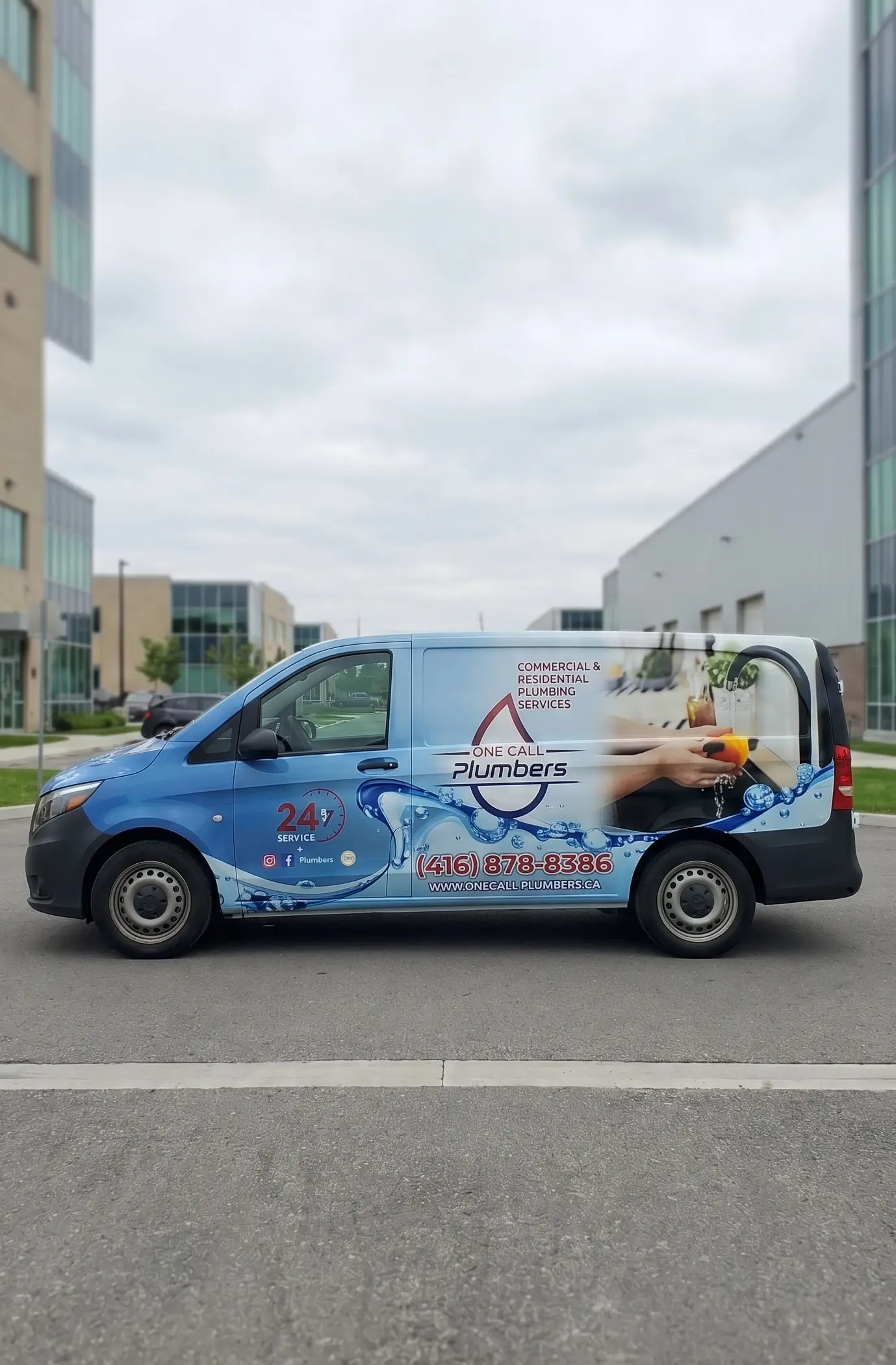
The 3M IJ1160 gloss lamination adds UV protection that prevents ink fading, scratch resistance for daily commercial use, and enhanced colour vibrancy. This material system — IJ180Cv3 substrate paired with IJ1160 overlaminate — is our standard for all commercial fleet wraps and printed vehicle graphics.
Wrap Finishes & Textures
Durability & Warranty Comparison
The table below compares the key durability and warranty specifications across the primary materials we install. All warranty ratings assume certified installation in a controlled indoor environment, which is exactly how every vehicle is wrapped at our facility.
| Material | Type | Outdoor Durability | UV Resistance | Removal Rating | Material Warranty |
|---|---|---|---|---|---|
| 3M 2080 Series | Colour-change cast | 5–7 years | Excellent | Clean up to 10 years | Up to 5 years |
| 3M IJ180Cv3 + IJ1160 Gloss Lamination | Printed cast + gloss lam | Up to 8 years | Excellent (laminated) | Clean per spec | Up to 5 years |
| Arlon SLX+ | Colour-change cast | 7 years | Excellent | Clean removal | Up to 5 years |
| Arlon DPF 6000XRP + 3420 | Printed cast + gloss lam | 7 years | Excellent (laminated) | Clean removal | Up to 5 years |
| 3M Scotchcal 7725 | Cut vinyl (lettering) | Up to 9 years | Excellent | Clean removal | Up to 5 years |
On top of every material warranty, we add our own 2-year installation warranty covering adhesion, edge lifting, bubbling, and any artistry defect. This means you have dual-layer protection: manufacturer warranty on the material and our warranty on the installation. Learn more about the financial benefits of professional car wraps.
How We Choose Materials for Your Project
Material selection is not one-size-fits-all. After 10+ years of wrapping vehicles across every category and use case, we evaluate five factors for every project before recommending a specific material.
A compact sedan has different surface complexity than a Sprinter van or a 45-foot tour bus. Larger vehicles with more panels, curves, and hardware require films with higher conformability ratings. We map every vehicle's body template before selecting the material grade.
3M and Arlon offer different price points across their product ranges. We help you find the best material for your budget without compromising on the cast vinyl requirement. Visit our pricing guide for cost breakdowns by material tier.
Some colours and finishes are only available from one manufacturer. If you want Arlon's exclusive True Blood Red or 3M's Flip Psychedelic, the material choice is determined by the colour itself. We carry swatch sets from both brands for in-person comparison during your consultation.
Vehicles that spend significant time in direct sunlight, road salt, or industrial environments benefit from higher-rated films and 3M IJ1160 gloss lamination for maximum UV protection and chemical resistance on printed graphics. For colour-change wraps, we recommend 3M 2080 series or Arlon SLX+ for their proven outdoor performance in Canadian conditions, including Mississauga's full four-season climate.
Have Questions About Materials?
We cover the most common material questions on our dedicated FAQ page, including: how thick is car wrap vinyl, can you wrap over rust or damaged paint, how long does vinyl last in Canadian weather, what exactly does the material warranty cover, and how 3M IJ1160 gloss lamination protects printed graphics from UV fading and scratching.
